
Deploy early and often. That’s how we operate. And over the years, we’ve shown you how to automate builds, tests, and deployments with GitHub Actions, from repo to Azure.
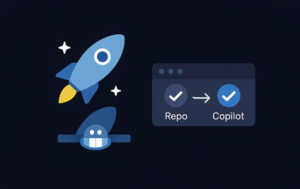
But in late 2025, something shifted — not just what we automate, but how we think about automation.
At VSLive last November, I shared a session that looks familiar at first glance — GitHub Actions, pipelines, GitHub Copilot — but the real focus was on how development teams can collaborate with AI in their delivery workflows, not just use it for code suggestions.
This post unpacks the key lessons from that session and shows how teams can start using agentic workflows today.
Why CI/CD Still Matters
You already know the pattern:
-
Commit code
-
Trigger a CI workflow
-
Run tests
-
Promote to environments
-
Deploy and monitor
GitHub Actions makes this smoother because everything lives right next to your code. You define workflows as YAML in .github/workflows, and GitHub takes care of the rest — builds, tests, deployments.
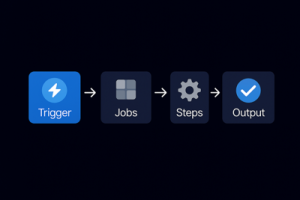
What changes when AI gets involved isn’t the steps — it’s the workload and ownership.
Copilot Is More Than Autocomplete
Most teams first encounter GitHub Copilot as a way to generate code:
“Write a unit test for this function”
“Add error handling to this snippet”
But in my VSLive demo, we took Copilot further:
-
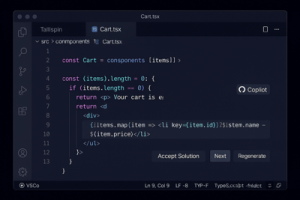
Copilot generated a CI workflow tailored to the repo structure
-
We didn’t paste a template and edit it — we described what we wanted, and Copilot produced the YAML
-
The result was a context-aware pipeline, not a generic one
That’s the important distinction — Copilot isn’t just a text helper. It understands the repo context and can produce meaningful config that you can review and customize.
Seeing CI/CD Work Live
In the session, I showed this live:
-
We pushed a commit
-
The GitHub Actions workflow ran
-
Build and test jobs executed
-
Deployment completed to Azure
Watching that feedback loop — code to cloud — makes it clear why pipelines matter: they’re shared behaviors, not just scripts.
That live feedback loop helped reinforce the core idea: CI/CD is your foundation — and agents can build on it.
Custom Agents and Agentic DevOps
The real shift happens when you start using agents — not just Copilot for suggestions, but custom Copilot agents that can perform multi-step tasks by themselves.
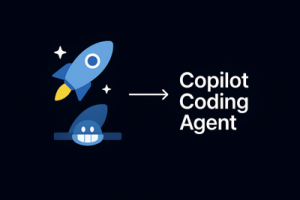
In the VSLive demo, we:
-
Defined a custom agent focused on CI/CD logic
-
Assigned it a task
-
Let it execute autonomously
-
Then inspected the pull request it generated
Instead of manually writing every workflow, we let an intelligent assistant generate, adjust, and refine parts of the pipeline. That PR wasn’t a slip of text — it was structured changes across multiple files that improved the delivery workflows.
This pattern — intent → execution → review — is what I call agentic DevOps.
It’s not about pushing a button and forgetting; it’s about encoding standards and best practices that an agent can apply consistently across repos.
From Repo to Cloud
As teams scale, writing CI/CD code by hand becomes a pain point:
-
Repetitive tasks add cognitive load
-
YAML drift creeps in
-
Best practices aren’t enforced consistently
Agents help by lifting repetitive decision work out of individual developer contexts and into reusable, reviewable behaviors.
But make no mistake — this isn’t magic. It still requires:
-
Strong fundamentals in CI/CD practices
-
Human-guided intent and review
-
Guardrails so the AI doesn’t go rogue
Tools like Copilot don’t replace expertise — they amplify it in real workflows.